
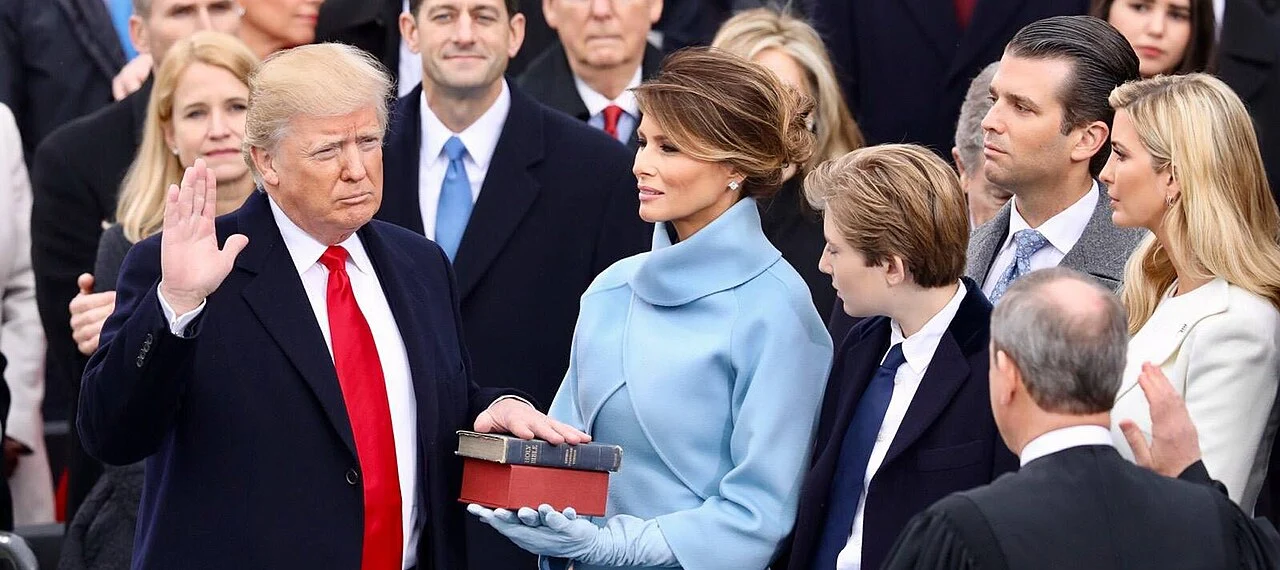
On 20 January 2025, inside the Capitol Rotunda under cold drizzle, Donald Trump was sworn in as the 47th president of the United States, returning to power four years after leaving office in disgrace. He was the first president in more than a century to win a non-consecutive second term, and the first felon ever to hold the office.
The ceremony, moved indoors for the first time in four decades, was attended by the tech executives who had become his closest allies, and his inaugural address promised a new golden age and a blitz of executive action. Within hours of taking office he had signed dozens of orders: declaring a national emergency at the southern border, beginning the withdrawal from the World Health Organization and the Paris climate accord, and unleashing a sweeping programme of deregulation and trade confrontation.
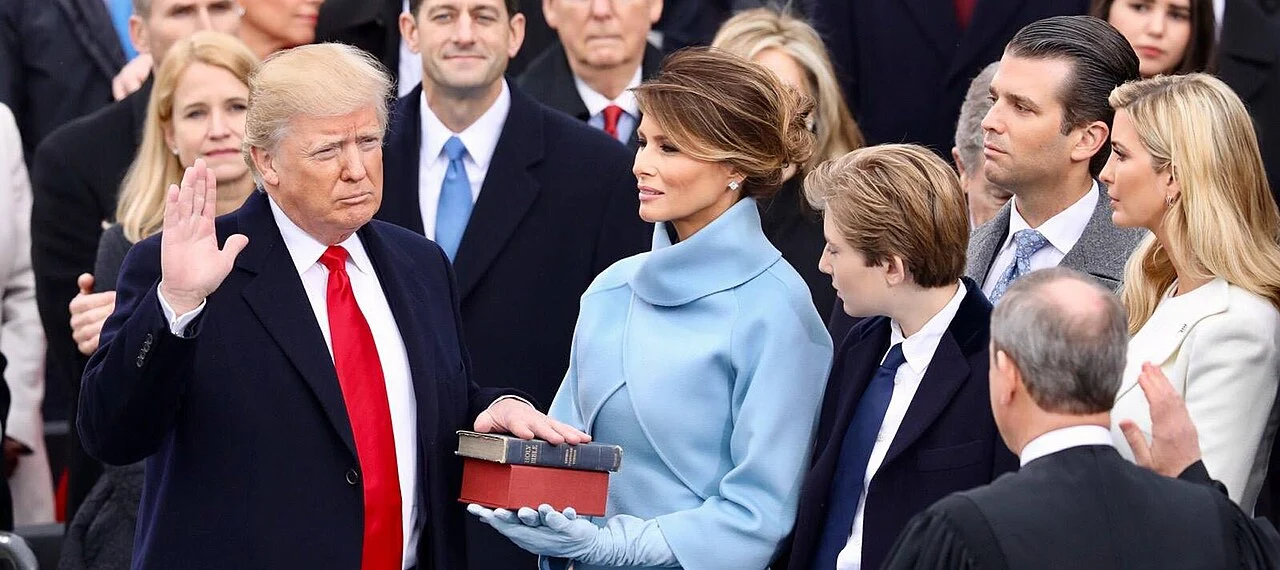

The speech struck a far darker tone than his first inaugural, dwelling on a country that had, in his telling, been badly failed by its leaders. The contrast was intentional: this time Trump governed with a party fully organised around him, a court system remade in his favour, and an agenda prepared by allies who had spent four years planning exactly how to use the second term.