On the Origin of Species is not a modern biology textbook. It is a sustained attempt to persuade a reader that observations from different areas of natural history can be understood through a common explanation.
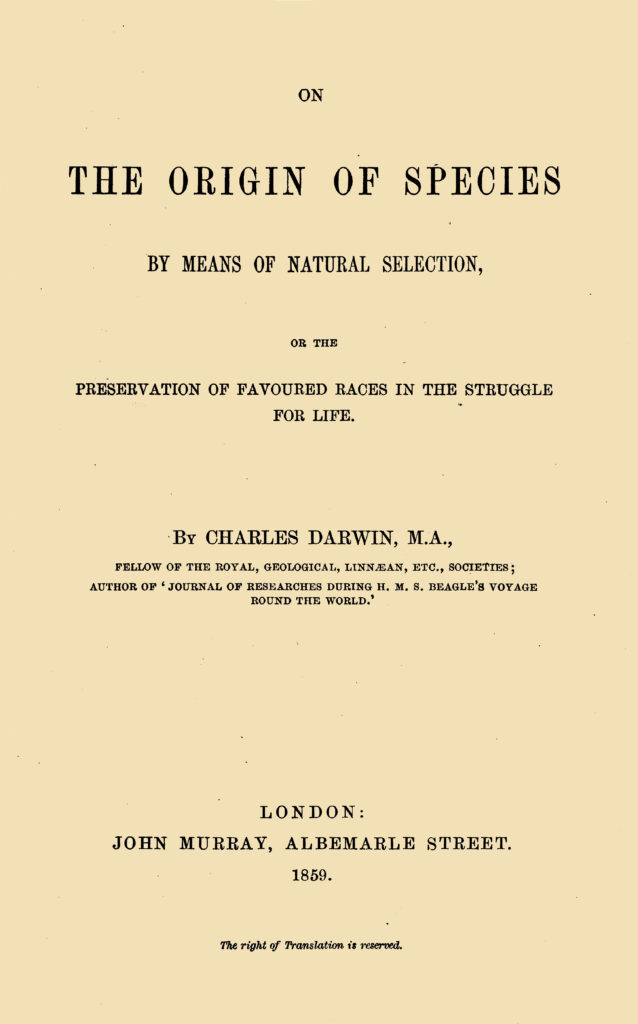
Charles Darwin published the first edition in 1859. The book develops natural selection through variation, inheritance, competition and the differing survival and reproduction of organisms. Its historical importance should not obscure the way the argument works on the page.
Evidence in an accumulating structure
Darwin begins with familiar practices of breeding and moves into questions about life under natural conditions. The sequence matters. A reader is invited to consider smaller changes before confronting the much larger implications of change across generations.
Chapters addressing difficulties do not interrupt the case; they are part of it. An argument becomes stronger when the reader can see which objections it must meet and which gaps the writer recognizes.
Read historically, then read further
Today’s evolutionary biology includes genetics and extensive evidence unavailable to Darwin. A historical reading should keep that distinction visible. The book is valuable without being treated as the final account of its subject.
For readers interested in research or professional writing, its transferable lesson is structural: evidence needs an arrangement. A list of observations does not become an explanation until the relationships between them are made clear and the difficult cases are faced.
Text and records consulted: Charles Darwin, On the Origin of Species, first edition.
Image: On the Origin of Species, 1859 title page. Public-domain scan. Image record. Archival image; not a photograph of a current event.