

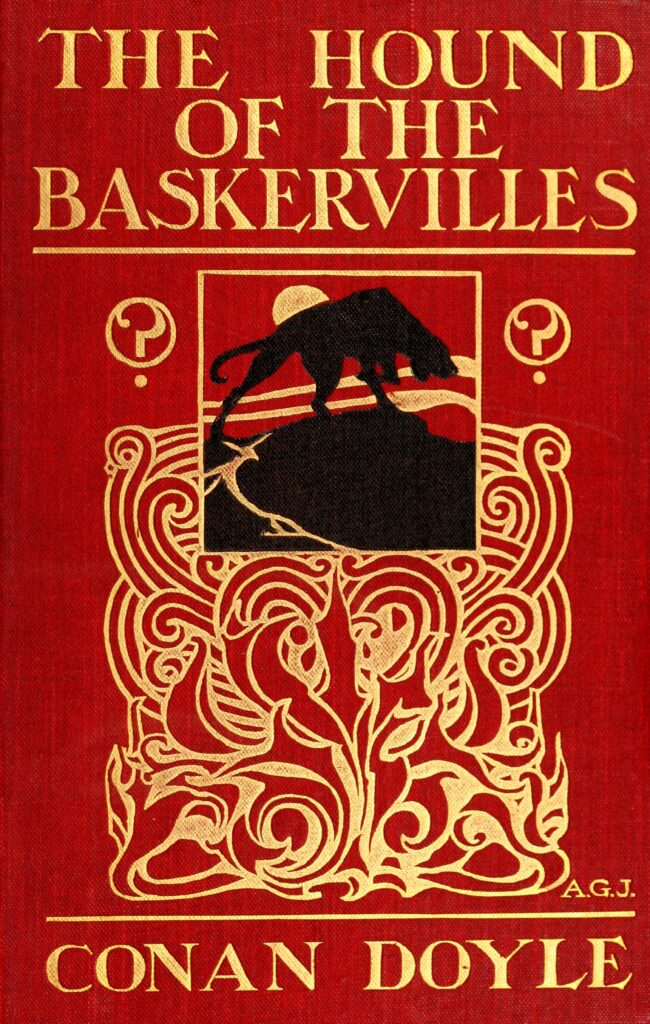
A detective story usually promises that attention will bring order. The Hound of the Baskervilles first makes disorder unusually attractive. An inherited curse, an isolated house and the moor encourage the reader to experience danger before understanding its machinery.
The book appeared in 1902 after serialization. Its central problem is not merely whether a hound exists. It is how a ready-made legend can shape the meaning of new events. Once fear supplies an explanation, apparently unrelated details begin to support it.
Watson’s essential uncertainty
Watson’s reporting gives the novel much of its strength. He observes people and follows leads without possessing the complete interpretive advantage associated with Holmes. His uncertainty lets the landscape remain threatening.
That arrangement is more than a device for withholding an answer. It distinguishes collecting information from knowing what the information means. A person can be conscientious and still work inside someone else’s misleading frame.
Atmosphere with a purpose
The moor is not disposable scenery. Distance, darkness and difficult movement give the investigation physical resistance. The reader must imagine what can be seen, reached or concealed in a particular place.
This is a useful starting point for readers approaching Sherlock Holmes for the first time. Read for the interaction between setting and belief, rather than racing only toward the solution. The eventual explanation matters because the novel has already shown how convincing a frightening alternative can become.
Text and records consulted: Arthur Conan Doyle, The Hound of the Baskervilles.
Image: Alfred Garth Jones, historic cover, 1902. Public-domain scan. Image record. Archival image; not a photograph of a current event.
.jpg)