
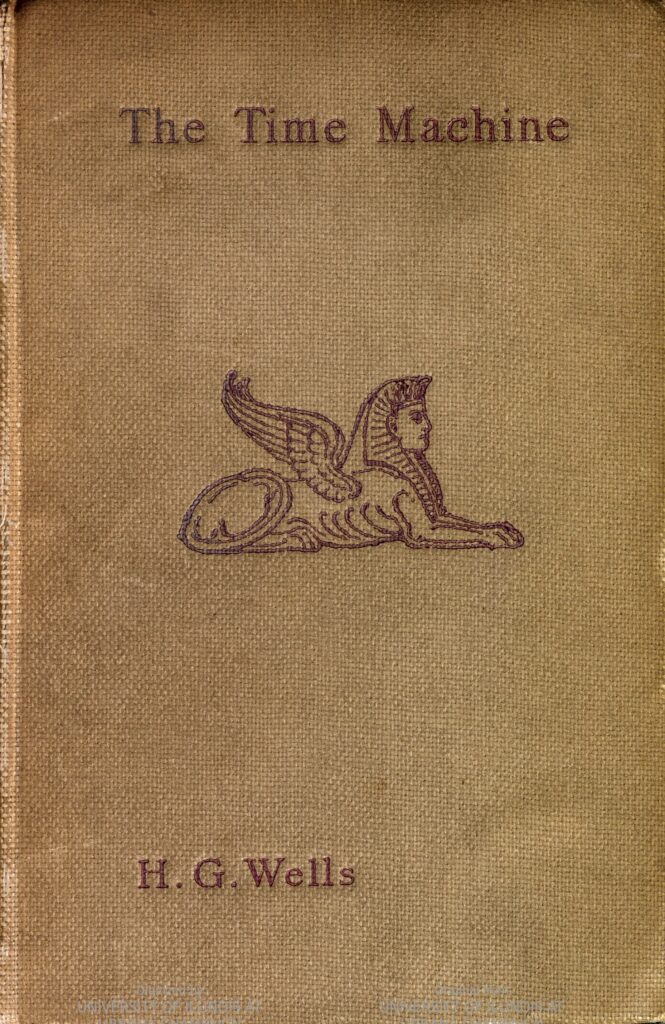
The machine in H. G. Wells’s novella promises access to the future. What it cannot provide is a guarantee that the future will reward the traveller’s expectations. That distinction gives the adventure its enduring unease.
Published in 1895, The Time Machine introduces a distant world inhabited by the Eloi and the Morlocks. The Time Traveller initially interprets what he sees too quickly. Beauty and apparent ease tempt him to mistake a surface arrangement for a complete explanation.
A future read through class
The division between the two populations makes the book especially interesting as social speculation. Wells extends inequality into the body and the environment, asking what might happen if separation became an organizing condition of human development.
The traveller’s explanations remain part of his account. Readers should notice when observation gives way to hypothesis. The story derives tension from the fact that he is trying to understand a world while also trying to survive it.
Beyond a clever device
The later journey makes human arrangements look temporary. Time travel becomes a means of changing scale: institutions that seem permanent in the present can become fragile when viewed across a much longer interval.
Read the novella for that shift in perspective. Its most productive question is not how the mechanism operates. It is whether people can recognize the assumptions they carry into an unfamiliar world before those assumptions become dangerous.
Text and records consulted: H. G. Wells, The Time Machine.
Image: Historic Heinemann edition binding. Public-domain scan. Image record. Archival image; not a photograph of a current event.
_-_front_cover.jpg)