Little Women accumulates meaning through episodes. A disagreement, an experiment or a disappointment can matter because the reader has spent time with the sisters before it occurs. A film has to create that familiarity under different constraints.
Compression is interpretation
Removing an episode does more than shorten the running time. It changes the evidence available for understanding a character. A sister whose ambitions develop through several scenes on the page may appear simpler if only one turning point remains.
The adaptation must choose which repetitions to preserve and which relationships can carry the weight of omitted material.
Chronology and emphasis
A linear structure emphasizes gradual growth. A structure that places different periods beside one another can emphasize memory, contrast or the distance between expectation and outcome. Each makes a different promise to the audience.
That is why fidelity is an incomplete measure of adaptation. Recognizable events can be arranged to produce a different emotional argument.
When watching a screen version of a family novel, notice which character receives time to change and which is mainly observed changing by others. The question reveals how an ensemble is organized. This article considers the craft problem in Alcott’s source text; it does not claim to assess a particular production or its licensing position.
Text and records consulted: Louisa May Alcott, Little Women.
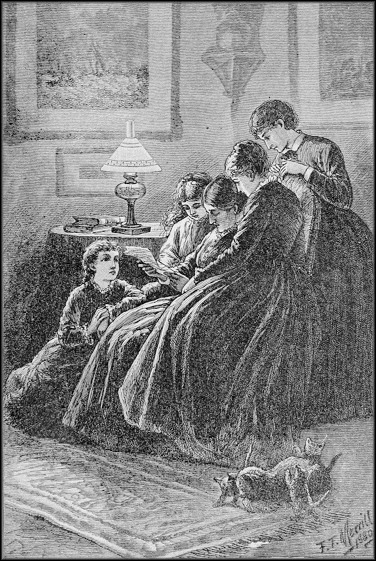
Image: Historic Little Women frontispiece, They all drew to the fire. Public-domain illustration. Image record. Archival image; not a photograph of a current event.