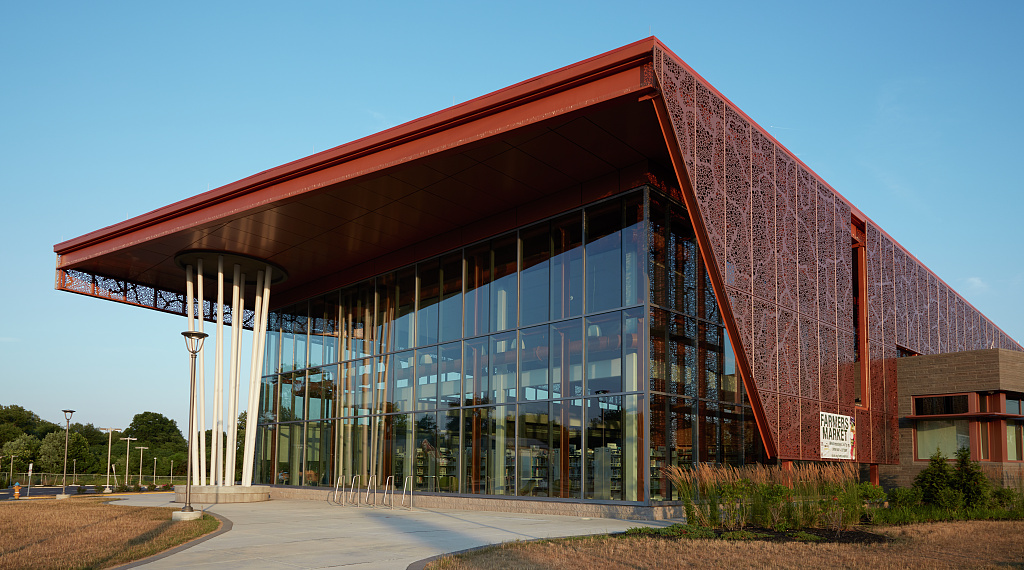
Not every library presents itself through towering book stacks. Carol M. Highsmith’s 2018 photograph of the Route 9 Library and Innovation Center in New Castle, Delaware, offers a more contemporary visual vocabulary.
The building’s name joins a traditional institution to the idea of making or developing something new. That pairing is a useful starting point for thinking about a library as a civic resource rather than a single kind of room.
Read the photograph carefully
An exterior image can show an approach, a facade and a relationship to surrounding space. It cannot establish attendance, program quality or the experience of every user. Those claims require evidence beyond architecture.
What the photograph does invite is a comparison. Historic reading rooms often represent knowledge through accumulated objects. A contemporary library may also need to communicate flexibility: a place in which people can work individually, learn together or seek practical help.
One institution, many possible uses
The design question is how those purposes become legible without forcing a visitor to understand an organizational chart. A welcoming entrance, clear information and a manageable route through a building are modest ambitions with substantial consequences.
Libraries deserve to be discussed at that human scale as well as through monumental interiors. The value of a civic building begins with what a person can understand and do when arriving at its door.
Text and records consulted: Library of Congress, Route 9 Library and Innovation Center catalog record.
Image: Highsmith, Carol M., 1946-, photographer. 2018-07-14.. Library of Congress. No known restrictions on publication. Image record. Archival image; not a photograph of a current event.