A screen adaptation of Frankenstein must decide more than how the creature looks. It must decide how the audience gains access to his account. That decision can change the moral balance of the story.
From reported speech to a visible presence
Shelley’s novel places stories inside stories. Walton receives Victor’s narrative, and Victor recounts the creature’s. A screen version may simplify that structure, but simplification has consequences. Viewers can come to know an event through action rather than through the partial account of a speaker.
Neither method is automatically superior. They distribute uncertainty differently.
Whose experience organizes the scene?
If the camera remains with Victor, the creature may primarily register as a threat. If it stays with the abandoned being, the same event can become an experience of rejection. Dialogue, duration and framing all influence that relationship.
A useful adaptation question is therefore what the audience is permitted to understand at each stage. Keeping every incident from a novel is less important than recognizing how its arrangement controls sympathy.
This is an analysis of adaptation craft rather than a review of a particular film or a statement about available screen rights. Shelley’s story offers a clear reminder: visual invention is only one part of bringing a book to the screen. The distribution of a voice can matter just as much.
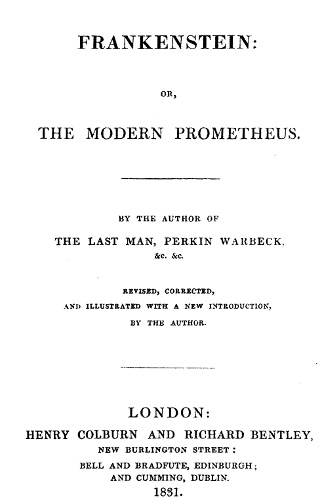
Text and records consulted: Mary Shelley, Frankenstein, 1831 edition.
Image: Historic Frankenstein title-page scan. Public domain. Image record. Archival image; not a photograph of a current event.