A historical photograph can make the past feel immediately accessible. That sense of access is valuable, but it should not be confused with complete knowledge. A frame records a view, not every condition that produced it.
Begin with the record
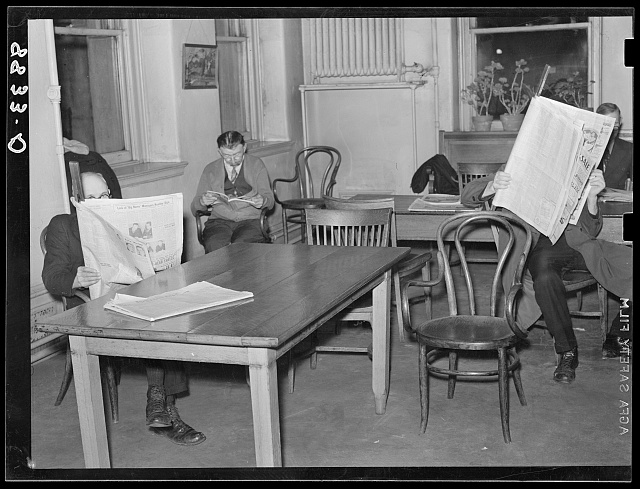
Identify the photographer, the place, the date and the catalog’s description before building an interpretation. In John Vachon’s Omaha reading-room image, the Library of Congress supplies November 1938 as the date. That information anchors the scene in a particular historical moment.
Next separate visible details from inferred ones. A person is seated; that can be observed. What they think about the publication in front of them cannot be established from posture alone.
Use uncertainty productively
Missing information is not a reason to abandon an image. It can become a research question. A room may prompt investigation into opening hours, borrowing rules or the publications available to its readers.
Documentary work becomes stronger when the difference between evidence and interpretation remains visible. A caption should identify the scene without turning a possible explanation into a fact.
The photograph’s limits are part of its value. They ask the viewer to look closely and then to seek the records that might explain what the image itself cannot tell.
Text and records consulted: John Vachon's Omaha reading-room photograph and catalog record.
Image: Vachon, John, 1914-1975, photographer. 1938 Nov.. Library of Congress. No known restrictions. For information, see U.S. Farm Security Administration/Office of War Information Black & White Photographs https://www.loc.gov/rr/print/res/071_fsab.html Image record. Archival image; not a photograph of a current event.