
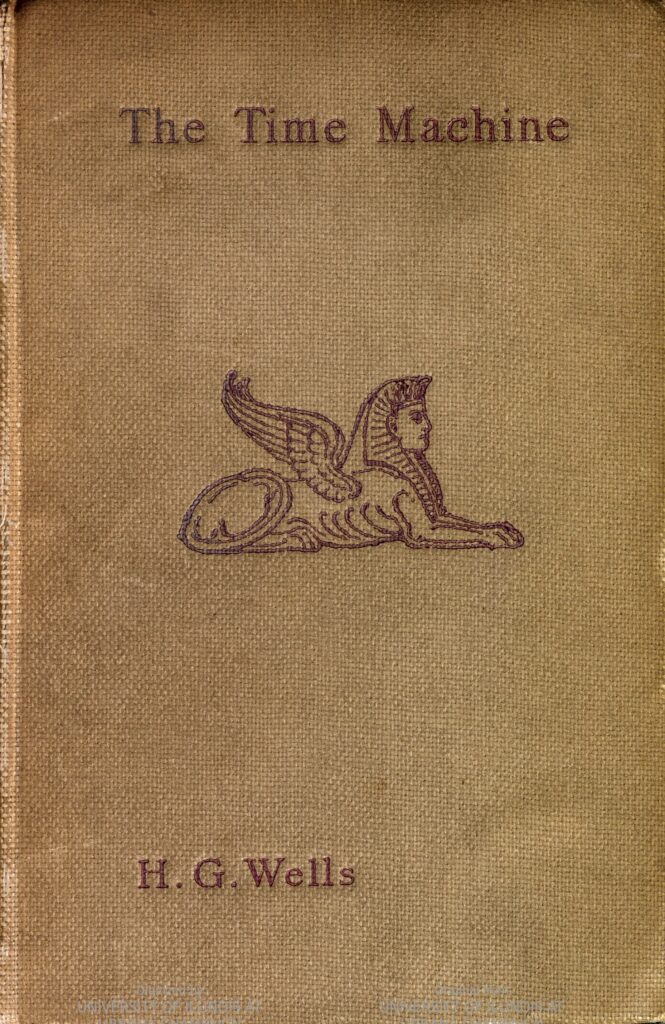
The Time Machine is not simply a journey presented without explanation. It is also an account delivered to other people. The distance between an extraordinary experience and an audience willing to believe it helps organize the novella.
A teller with something at stake
The Time Traveller must make unfamiliar events intelligible. His observations, his hypotheses and his immediate fears do not always occupy the same level of certainty. Listening can make those distinctions easier to notice because explanation arrives with the pressure of a speaking voice.
Pauses matter. A delay before an inference can suggest that the narrator is reconstructing his understanding rather than reading a settled report.
Hear the frame
When approaching an audiobook, pay attention to the transition between the surrounding conversation and the traveller’s account. The change establishes who is speaking, what they can know and how close the listener is being brought to an event.
This reading guide does not evaluate a particular recording. It proposes a way to hear the novel’s structure. The machine crosses time, but the story must cross another distance as well: the space between a person’s experience and the people asked to accept his telling of it.
Text and records consulted: H. G. Wells, The Time Machine.
Image: Historic Heinemann edition binding. Public-domain scan. Image record. Archival image; not a photograph of a current event.

_-_front_cover.jpg)